
Six places money goes missing in your store. You will not find them on your own.

The walk

Six places money goes missing.

Every one of them has a number attached, and every one of those numbers goes on the board at the monthly meeting.

PLACEHOLDER: the parts counter first thing, a customer's ticket on the pad.

Stop 01

The front counter

It is the first thing a customer touches and the last department anybody measures. Most owners can tell you last month's sales and not one of them can tell you the fill rate.

Parts fill rate. Lines you filled off your own shelf, the first time somebody asked.
PLACEHOLDER: the bin wall in the back of the parts department, mid-morning.

Stop 02

The bin room

Shelves are where a dealership quietly parks its cash. Nobody sets out to buy twelve of something that sells one a year, but the reorder point did it for them.

Aged parts. What share of the shelf has not moved in twelve months.

PLACEHOLDER: the service write-up desk, a stack of open work orders.

Stop 03

The write-up desk

Every hour that goes missing goes missing here, in the gap between what the tech did and what got written on the ticket.

Service recovery rate. Hours you billed a customer, divided by the hours you paid a technician for.

PLACEHOLDER: two service bays with machines on stands, doors open.

Stop 04

The bays

A tech on the clock is not the same as a tech on a work order. The difference is usually waiting on a part, waiting on a decision, or waiting on you.

Technician productivity. Hours a tech was on a work order, divided by the hours he was on the clock.

PLACEHOLDER: the front lot before opening, rows of machines.

Stop 05

The lot

Wholegoods is the department everybody watches and the one that pays the least. Parts and service are what keep the doors open in a slow year.

Absorption. How much of your fixed expense parts and service cover before you sell a single unit.

PLACEHOLDER: the owner's office at the end of the day, paperwork out.

Stop 06

The office

This is where the five numbers above either get looked at once a month or do not. That is the entire difference the group makes, and it is not a small one.

The board. All five, read out loud, in front of seven to twelve other owners.

Watch

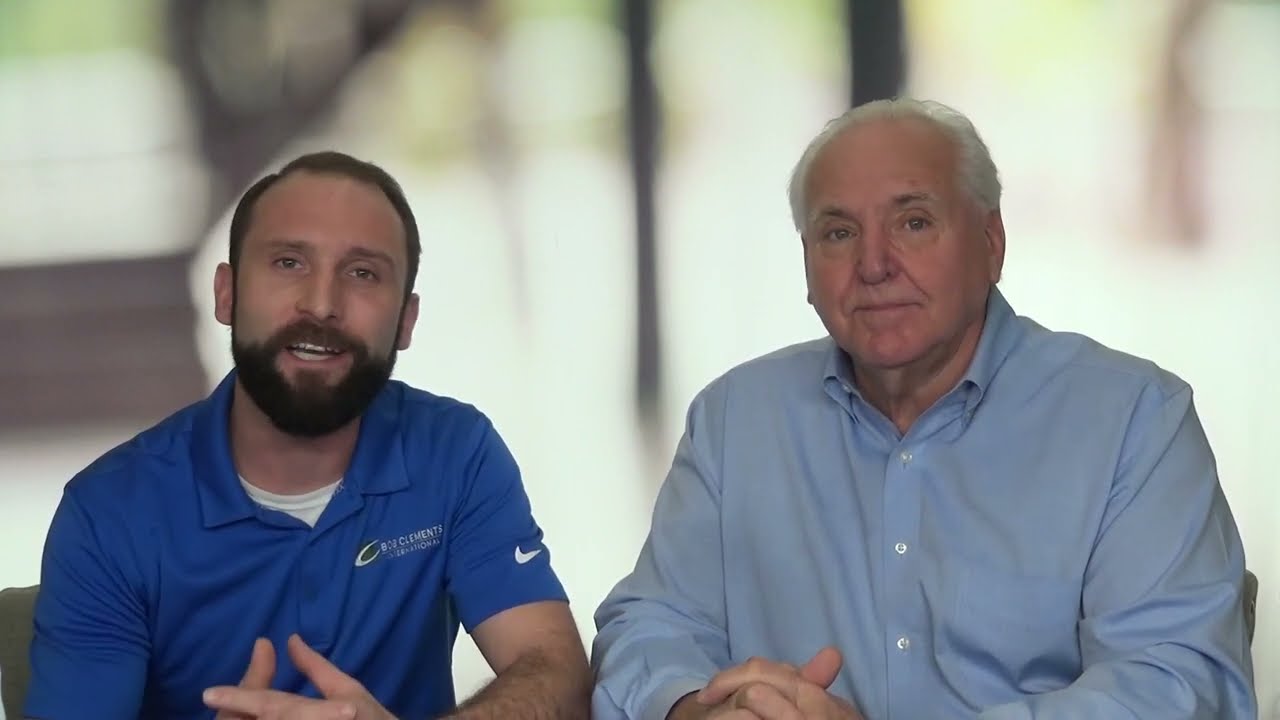
Dealer Success Groups, explained.

Still from Bob Clements International's video, Dealer Success Groups with Bob Clements International.

Published by Bob Clements International. Watch it on YouTube

Dealers who did it

“Your system works as promised. We went from a 65% recovery rate to 123%.”
Spencer Coleman, Coleman Tractor
Elizabeth at her desk at Lauf Equipment, a row of tractors on the lot through the window behind her.
“Bob and his team have really helped us through some of the most unstable times there's ever been for a farm dealership.” Elizabeth, Lauf Equipment

What it costs

$839 a month, per location.

That covers the group hour, the monthly workshop, Jeff's half hour, the Dealer Toolbox and the hiring program. The Toolbox sells on its own at $99 a month and hiring at $1,495 a quarter, so the coaching itself is about $242 of it.

Stop three on the walk is the recovery rate. One technician billing one more hour a day at a $135 shop rate returns about $2,800 a month, which pays for the seat in six working days.

Apply

Groups are matched, not filled.

Three things is enough to start. Jeff reads every one of these and calls you himself.

Please tell us your name.

Please tell us the dealership name.

We call before we email. Please leave a number.

Would you rather ask questions first? Book thirty minutes

Illustration of a man in a shirt and tie walking up a rising row of coin stacks.

Before you decide anything

How much money are you walking over?

Start at stop three. Work out your recovery rate, which takes about ten minutes and a month of work orders.

Download the calculator